Kaziranga is only open around seven months of the year, which narrows the question somewhat — but within that window, the difference between an October visit and a March one is bigger than the shared "open season" label suggests. The park floods every monsoon, and how far the water has receded by the time you arrive changes almost everything about the trip. There isn't really one single best time to visit Kaziranga National Park; there's a best time for what you're specifically hoping to get out of it.
Late October to Early November: The Reopening
The park reopens once the Brahmaputra's floodwaters have drawn back enough for the ranges to be passable again, usually late October. Grass is still tall from the monsoon growth, which means good scenery, excellent grassland birdlife but harder large game spotting — animals have plenty of cover to disappear into. Despite these conditions, this time of the year gets many visitors due to the Indian festive season. Hotel rates also tend to be higher during this time of the year than during other months.
December to February: Cool, Clear, and Crowded
This is also peak season, and for good reason. Mornings are cold enough for a jacket or a shawl, the sky stays clear for days at a stretch. By mid to end February the Forest department begins to burn the grasslands in controlled patches so that old vegetation and high canopy tree saplings are wiped out making way for new grass which is essential for the grassland to survive. This opens up sightlines across the floodplain. It's also when hotels and jeep permits are hardest to secure — book well ahead if these months are what you're aiming for, particularly around the winter holiday weeks when Indian domestic travel spikes along with international visitors.
March and April: The Best Sightings of the Season
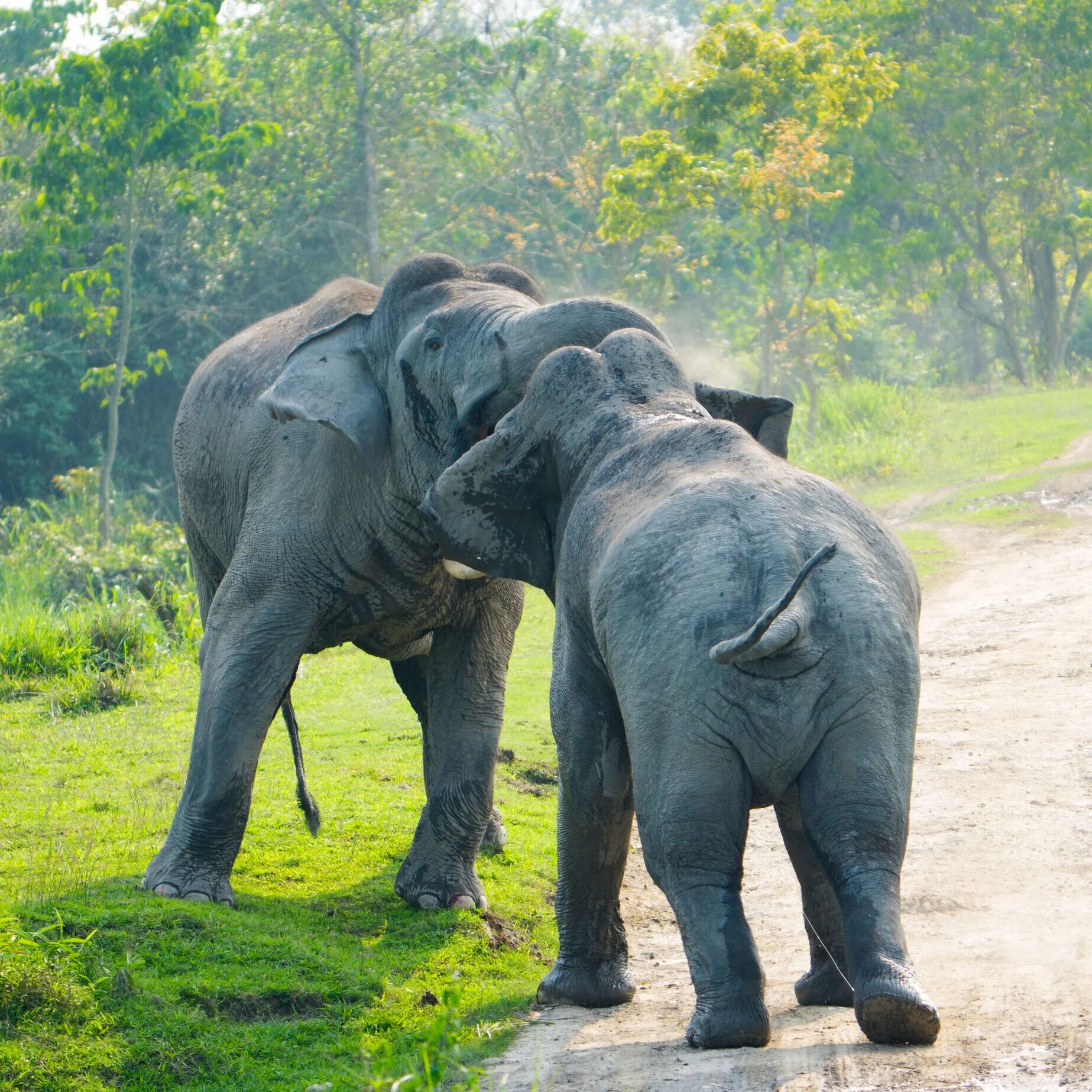
As temperatures climb and water sources shrink, wildlife concentrates more predictably around the remaining wetlands, and this is typically when large elephant herds and tiger sightings become most consistent. The trade-off is heat — days get noticeably warmer, and by late April the park is approaching its close for the season. Birders in particular tend to favour this window too, since the thinner vegetation makes species such as the Bengal florican, hornbills, several species of warblers, babblers and birds of prey easier to spot.
May to Mid-October: Closed for the Monsoon
Kaziranga shuts to visitors once the monsoon sets in, and for good reason — the Brahmaputra regularly floods large stretches of the park, pushing wildlife toward higher ground outside the boundaries and making the interior roads impassable. There's no safari access during this period, so plan around it rather than against it. Some tour operators will still take bookings for accommodation nearby during these months, but the safaris themselves simply aren't running.
Golden Hour, and Why It Matters More Here Than the Calendar Does
One thing seasoned visitors watch for that first-timers usually miss: the light in the hour after sunrise and before sunset changes how visible wildlife actually is against Kaziranga's tall grass, regardless of which month you're in. Early winter mornings often carry a light mist off the Brahmaputra that lifts off within the first hour of a safari, and guides who know a range well will time the safari to be near open water right as the mist clears, since animals hidden become visible in the grasslands once the light shifts. This is less about which month you booked and more about how a single morning unfolds, which is part of why two safaris a week apart in the same season can produce noticeably different results.
How Weekday Timing Affects the Experience Too
Season isn't the only variable worth factoring in. Weekends and Indian public holidays bring a visible jump in jeep traffic on the more popular ranges, particularly Kohora (Central zone), which can mean queuing at the entry gate and a slightly more crowded feel on the safari track themselves. Visitors with flexible dates often get a noticeably quieter experience by shifting a booking a few days either side of a weekend, even within the same peak month.
So What Should Actually Decide Your Dates?
If comfortable weather matters more to you than maximum sighting odds, November through February is the safer bet, even with the crowds. If you're chasing the best possible chance at seeing a rhino up close, March and April tend to deliver more, provided you can handle the heat and humidity. Either way, the four ranges — Kohora, Bagori, Agaratoli and Burapahar — don't all respond to the season identically, which is where local knowledge starts to matter more than a generic calendar.
This is exactly the kind of detail 47 Safaris factors into every itinerary. We track which range is performing better than others, not just which month the calendar says is "peak," and every safari runs in a private jeep with an English-speaking naturalist rather than a shared vehicle working to someone else's schedule. Get in touch and we'll build your Kaziranga trip around the dates that actually suit you.
A generic "October to April" answer tells you when the gates are open. Working out the best time to visit Kaziranga National Park for what you personally want is the part that determines whether the trip lives up to the photos.