The phrase "Big Five" comes from Africa, where it once meant the five animals hunters considered the hardest to take on foot: lion, leopard, elephant, rhino and buffalo. Today it is a wildlife-watching checklist. Kaziranga has its own version, and it is a good way to plan a drive.
Kaziranga’s big 5 are the greater one-horned rhino, the Bengal tiger, the Asian elephant, the wild water buffalo and the eastern swamp deer. Some you will almost certainly see, and one will take luck. Here is where to look for each, and what a naturalist watches for.
Greater one-horned rhino
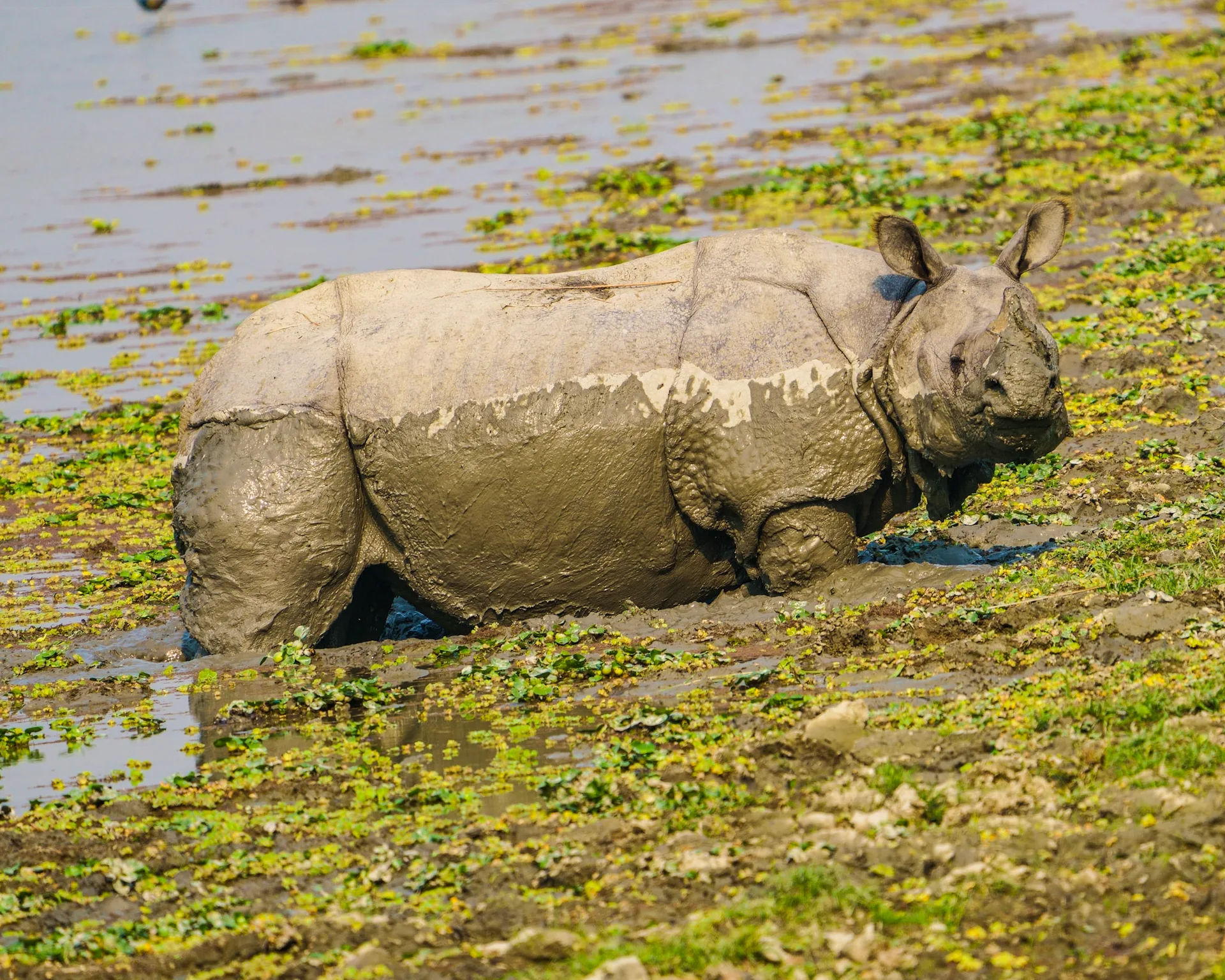
The reason most people come. Kaziranga holds most of the world's greater one-horned rhinos, and the park's own census put the number above two thousand. You can expect to see several on a single drive, often grazing in the open grass or standing in shallow water to cool off. Wallows near the tracks and the edges of the wetlands are good places to slow down.
They look slow and placid. They are not. A rhino can run fast over a short distance, which is one reason we stay in the vehicle and keep quiet.
Wild water buffalo
Kaziranga is one of the last strongholds of the wild water buffalo, and many guests are surprised by how large they are, bigger and heavier than the domestic ones you see in villages or even the Cape buffalo seen in African game drives. Look in wetlands and along the water's edge, where herds wallow in the mud. They are mostly wary and stay far from the vehicle, so binoculars help.
Asian elephant
Wild elephants move through Kaziranga in herds, and the tall grass can hide even big animals until they step out. They are most visible near the forest edge and along the tracks, particularly in the cooler parts of the day. Keep your distance if a herd crosses, and let the driver decide when to move. A calf in the group can make the adults protective.
Eastern swamp deer
The swamp deer, or barasingha, is the one people tend to forget. It is a large deer with branching antlers, and the eastern subspecies lives in the open grasslands here. You are most likely to spot herds in the open stretches, and the males carry large, branching antlers. If you only count rhinos, you will drive past them.
Bengal tiger
Kaziranga was declared a tiger reserve in 2006, and tigers live here, but they are the hardest of the five to see. The grass is tall and they stay hidden in it. A sighting usually comes from a well-timed moment, a deer alarm call, or a fresh pugmark on the track. This is where an experienced naturalist makes the difference. We would never promise a tiger. Treat it as a bonus on top of the rhinos, and give yourself several drives.
Ranges and timing
Rhinos, elephants and buffalo are common across the ranges, so you can see them almost anywhere. To see Kaziranga’s big 5 in a single trip, spend time in more than one range, especially for elephants and swamp deer, since herds shift with the season and the water. The first drive of the morning is quiet and cool, and animals are more active then. Morning drives run from 7:30 AM to 11:30 AM and afternoon ones from 1:30 PM to 5:00 PM. The best months run from roughly November to April, when the park is open.
What else you may see
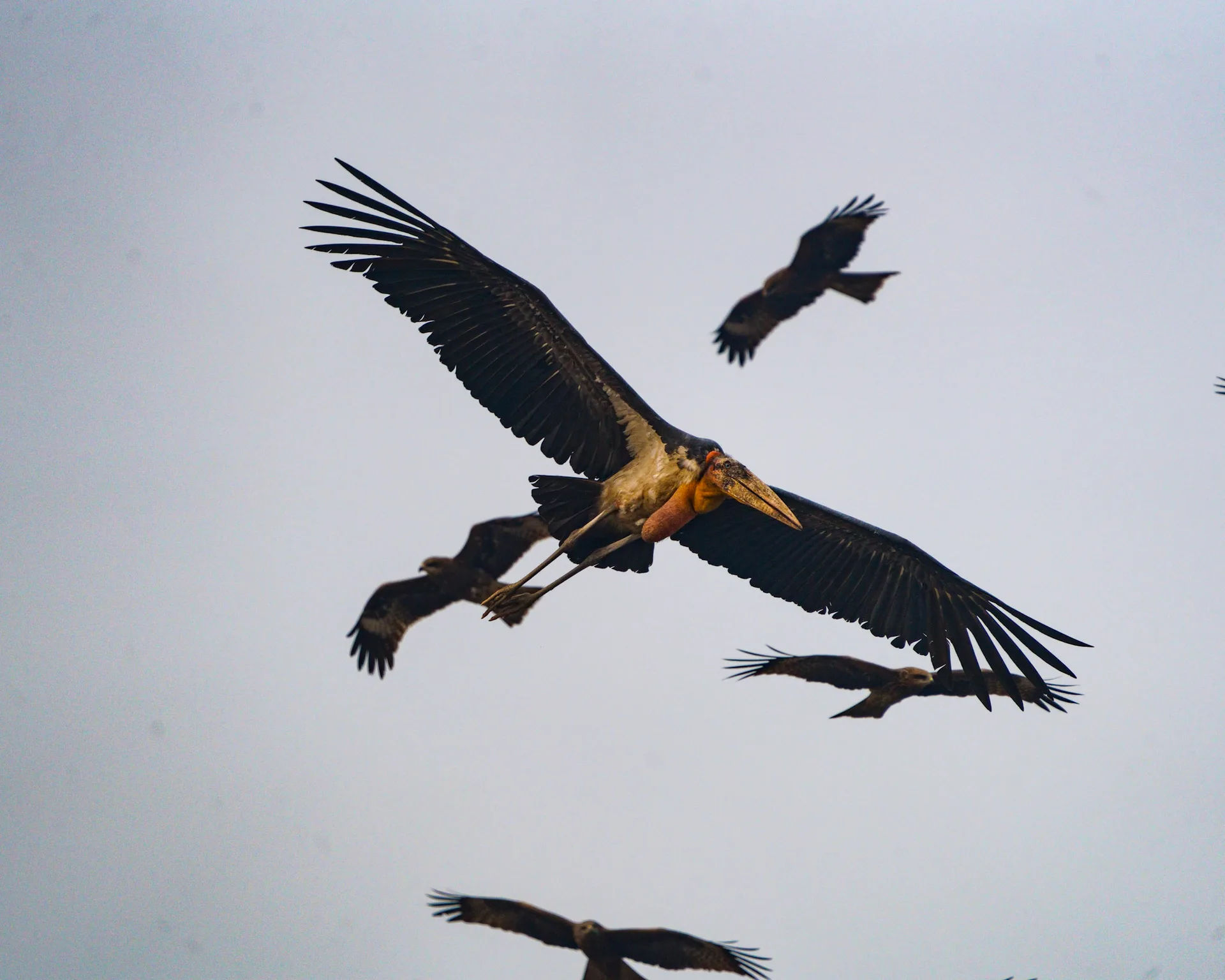
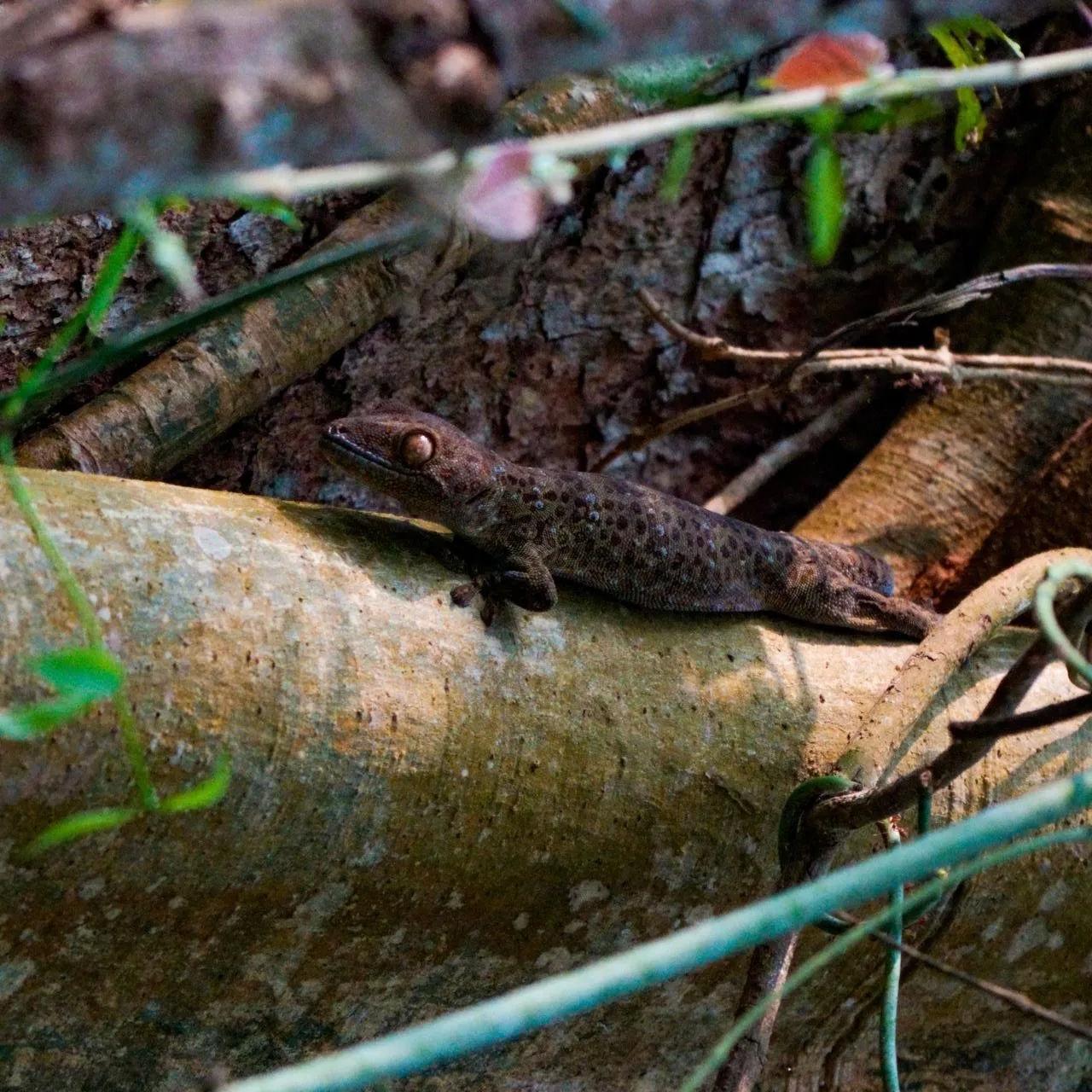
The five are only the headline. Hog deer graze in the grass, Tokay geckos stay hidden in large tree trunks, Gangetic river dolphins are seen in parts of the Park closer to the Brahmaputra, hornbills and gibbons are in tall canopies, the wetlands are full of waterbirds, and the park has many birds of prey. Some guests come back from a drive talking about a bird they had never heard of, with no rhino in the story at all. A naturalist who knows the calls adds a lot here.
A realistic expectation
Four of the five are very likely on a good trip. The rhino, the buffalo and the elephant are close to certain, and the swamp deer is likely if you visit the right range. The tiger is the one that takes luck. Plenty of guests leave Kaziranga happy without one, and a few see it on the first morning. Go for the full experience and not only the checklist.
How to tick off all five
Plan at least three drives across different ranges and both shifts. Take binoculars, since the buffalo and the deer keep their distance. Move slowly and speak softly, because that keeps the animals relaxed and gets you a longer look. And ask your naturalist what has been seen that week. Nobody knows the grass better than someone who has driven through it yesterday.
See them with 47 Safaris
We plan Kaziranga drives in a private jeep with an experienced English-speaking naturalist, who points out the animals you might miss and explains what you are watching. We also book the permits and a hotel close to the gate. Safari prices are set by the Forest Department and change every year, so ask us for a quote.
Tell us your dates and how many drives you would like, and we will plan a route that gives you the best chance of seeing Kaziranga’s big 5.